Client outreach
Real cards. Real handwriting. Sent for you.
Physical greeting cards written with robotic handwriting pens and mailed with a real stamp — birthdays, policy anniversaries, thank-yous and win-backs, triggered from the data you already keep in LyncCIS.

Why paper still works in an inbox-saturated market
Your client gets somewhere between fifty and two hundred marketing emails a week and roughly two pieces of personal mail. A handwritten card is not competing with your competitors' emails; it is competing with nothing, in a channel that has been almost entirely abandoned.
Retention in insurance is a relationship business dressed up as a renewal date. A card that arrives on a birthday, after a claim, or on a policy anniversary does not sell anything — which is exactly why it is remembered when the renewal conversation happens.
Triggered by your book, not a spreadsheet
Automations fire off CIS policy and lead data, so a birthday, renewal date or newly issued policy can put a card in the mail without anyone on your team remembering to do it. The trigger data is the same data your commissions run on, which means the list is never stale and never maintained twice.
Common automations agencies start with:
- Birthday cards to every active client.
- Policy anniversary cards timed ahead of the renewal window.
- Thank-you cards on new business issue.
- Win-back cards to lapsed clients at a set interval.
- Welcome cards when a purchased lead converts to a policy.
How a card gets made
- 1
Pick a template
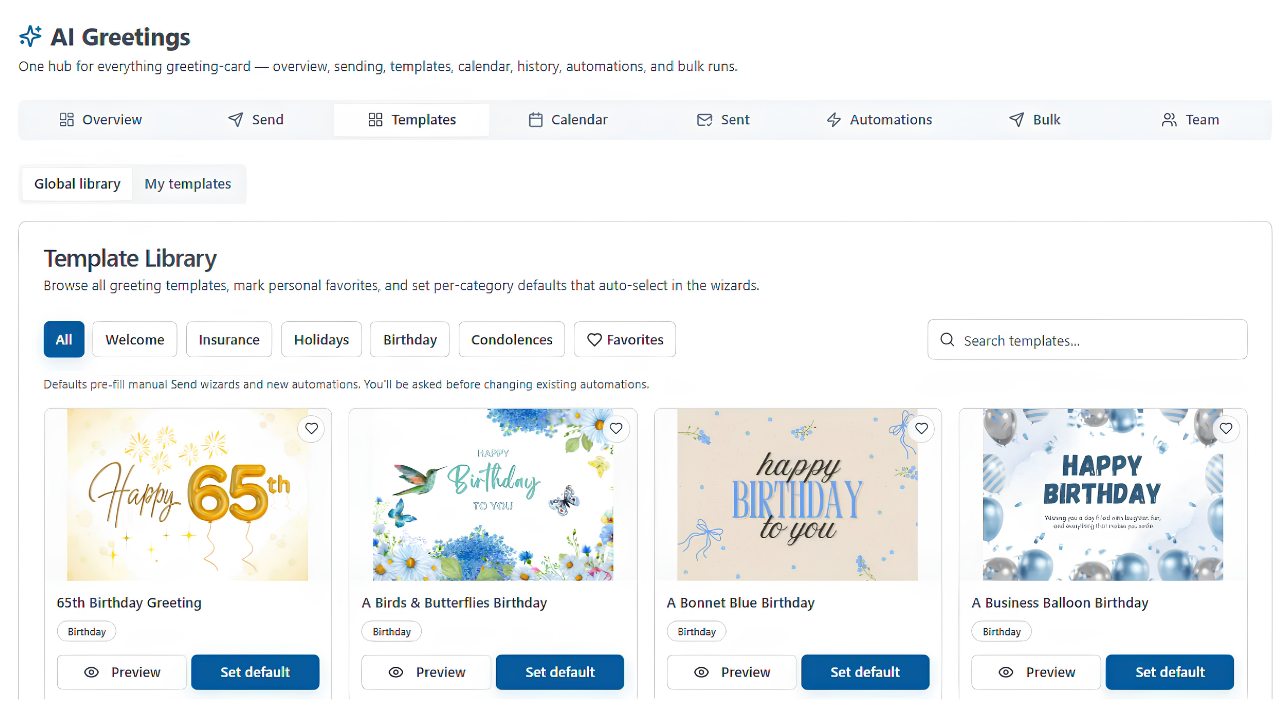
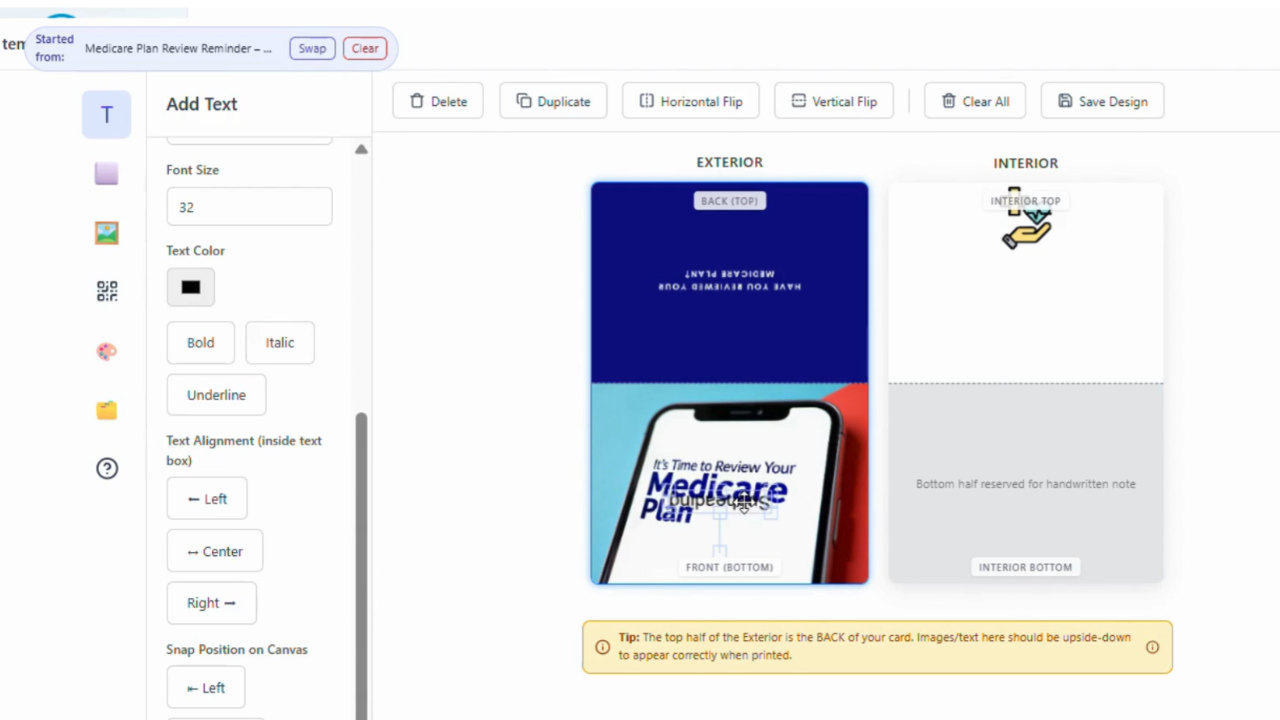
Choose from the card library, grouped by occasion, or build your own design in the editor.
- 2
Write the message with merge tags
Personalise with fields from the client record — first name, policy, agent — so a thousand cards read like a thousand notes.
- 3
Validation runs before printing
Every card is checked for unresolved placeholders. A card containing an unfilled merge tag is blocked, so no client ever receives a 'Hi [FirstName]' letter.
- 4
Robotic pens write it
The card is written in real ink on card stock — as of July 13, in a larger size on upgraded paper, at no change to credit pricing.
- 5
It is stamped and mailed
A real stamp, addressed to your client, sent on your agency's behalf. Credits are drawn from your balance as cards are produced.
Credits, controls and who can send
Greetings run on a credits balance with optional auto top-up, kept separate from AI Concierge credits so a busy outreach month does not consume your reporting allowance. Owners control which team members are allowed to send, which keeps a well-meaning new hire from mailing four hundred cards on their second day.
Every send is recorded against the client record, so the card that went out in March is visible next to the policy it was about, alongside the rest of that client's communication history.
Compliance and your responsibility
Merge-tag validation protects against the most visible failure mode, but it is not a compliance review. You remain responsible for ensuring your outreach follows the marketing rules that apply to your book — including Medicare marketing requirements where relevant. Our AI disclaimer sets out how AI-assisted copy should be reviewed before it goes out.
Related
Greetings are one part of the retention side of the platform — see features for the full picture, or the lead marketplace for the acquisition side.
Frequently asked
Are these really handwritten?
They are written on real card stock by robotic handwriting pens using actual ink, then mailed with a real stamp. They are not printed to look like handwriting.
What changed on July 13?
Cards now ship in a larger size on upgraded paper stock, at no change to credit pricing.
How does billing work for cards?
Greetings run on a credits balance separate from AI Concierge credits, with optional auto top-up so an automated birthday campaign does not stall mid-month.
Can a card go out with an unfilled merge tag?
No. Every card is validated for unresolved placeholders before it can print. A card containing an unfilled merge tag is blocked rather than mailed.
Who on my team can send cards?
Owners control which team members have send permission, so outreach stays on brand and within budget.
Is this compliant for Medicare-related outreach?
You remain responsible for compliance in your jurisdiction. LyncCIS gives you approved templates, merge-tag validation and a record of what was sent to whom; the marketing rules that apply to your book are yours to apply.
Start your seven-day free trial.
Every plan includes a 7-day free trial and a complimentary expert-led setup call. Card required at signup; cancel any time during the trial.