Hierarchy
Distributions your downline can verify
Override disputes cost you agents. LyncCIS applies your hierarchy the same way every cycle and shows each producer the math behind their own payout.
Why hierarchy is where agencies lose people
An agent rarely leaves because an override was low. They leave because it was unexplainable. When the answer to "how did you get this number" is a spreadsheet only one person understands, every cycle becomes a small trust withdrawal — and recruiting against that reputation is expensive.
The fix is not a better spreadsheet. It is a structure the system applies identically every month, and a portal where a producer can see the same numbers you see.
Up to ten upline levels
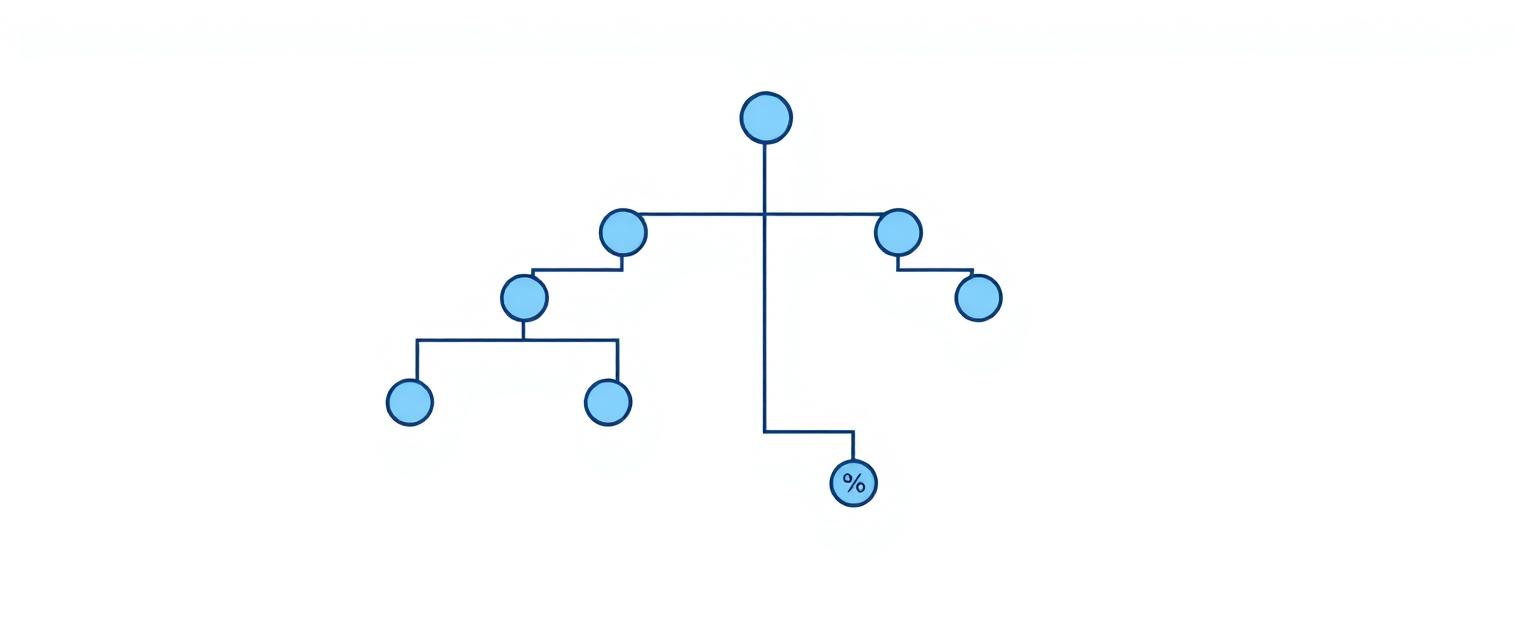
Model the structure your agency actually runs: direct writers, agency managers, regionals and everyone above them. Each level carries its own override rate, and those rates are set per carrier — because almost no agency pays the same override on every product line.
Depth is not just for large FMOs. Even a three-level agency benefits from having the structure recorded rather than remembered, because the person who remembers it is a single point of failure.
Writing-code-based matching
Agents are matched to statement lines by writing code. That is a deliberate design decision: the carrier already knows who wrote the business, and the writing code is their record of it. Matching on anything softer — a name, an email, a partially typed agency label — is how business gets attributed to the wrong producer and how an override lands on the wrong upline.
When a code appears that LyncCIS does not recognise, the line is queued rather than guessed at. You attach the code to the right agent once and it resolves automatically from then on.
How a distribution runs
- 1
Commission posts to a writing agent
The statement line is matched to a policy and to the producer who wrote it, using the carrier's writing code.
- 2
Splits resolve first
If the case is shared, split percentages are applied so each producer's share is established before anything moves upward.
- 3
The hierarchy is walked
LyncCIS walks the writing agent's upline, level by level, applying the override rate configured for that level and that carrier.
- 4
Each level is recorded separately
Every override is stored as its own record tied to the originating commission, so any payout can be traced back to the exact statement line that produced it.
- 5
Producers see their own math
The distribution appears in each agent's portal and on their statement, in the same shape the agency sees it.
Producer portals
Every agent gets a branded portal with their book of business, their statements and their production history. In practice this does two things: it removes a category of inbound email from your staff's week, and it gives your recruiters something to show. An agent deciding between two agencies notices which one can display their numbers on demand.
Changes without rewrites
Move an agent, add a level, or adjust an override rate, and future cycles pick it up automatically — with an edit history recording what changed and when. There is no separate "restructure" project and no rebuilt spreadsheet, which means the structure in the system stays current instead of drifting from reality between annual clean-ups.
Who this is for
Agencies and FMOs paying downline agents, recruiters building multi-level structures, and any organisation where more than one person earns from the same policy. If you have ever rebuilt an override calculation from scratch to answer a single agent's question, this page is describing your problem.
Related
Distributions are only as good as the statements behind them — see commission tracking for how the money gets in, and security for how role-based access keeps compensation data scoped correctly.
Frequently asked
How many upline levels does LyncCIS support?
Up to ten. Each level can carry its own override rate per carrier, so a structure that pays differently for Medicare Advantage than for final expense is modelled directly rather than approximated.
How are agents matched to statement lines?
By writing code. Distributions follow the carrier's own record of who wrote the business, which removes the manual name-matching step where most override errors originate.
What happens when an agent moves in the hierarchy?
You move them, and future cycles pick the change up automatically. The edit history records what changed and when, so a prior cycle can still be explained on its original structure.
Can agents see how their own override was calculated?
Yes. Each producer has a branded portal showing their book of business, statements and production history within their permitted scope, so the math is verifiable without asking the home office.
Do uplines see their whole downline?
They see what their role permits. Reporting enforces column-level privacy, so an upline sees the production they are paid on without seeing compensation outside their scope.
Start your seven-day free trial.
Every plan includes a 7-day free trial and a complimentary expert-led setup call. Card required at signup; cancel any time during the trial.